
What Power Bank Is Recalled? Check Exact Model and Serial Number
Verify whether a portable charger is under an active CPSC or manufacturer recall by checking exact model codes (Anker A1263, A1257, A1642, A1647, A1652, A1681, A1689, INIU BI-B41), serial strings, and claim rules before disposal.
Verified against U.S. CPSC recall notices #25-338 and #26-135, official Anker recall portals (/a1263-recall, /rc2506, /a1642-a1647-a1652-recall), official INIU recall portal (/pages/recall-b41), and U.S. EPA used lithium-ion battery disposal guidance on October 17, 2026 How this guide was prepared
A portable charger is never recalled by brand name or printed capacity alone, and guessing from a retail title can leave a fire-damaged pack in use or get a valid claim rejected. Whether a unit is covered by an active lithium-ion fire-hazard notice depends on four physical and transaction records that must match simultaneously: the exact casing model code (such as Anker A1263, A1257, A1642, A1647, A1652, A1681, or A1689, or INIU BI-B41), the laser-etched serial number (SN) or batch code on the enclosure, the manufacturing or retail sale window, and the original sales channel. Before throwing a suspect battery pack away, unplug it, isolate it away from combustible surfaces, and keep the physical shell—discarding the unit too early will cost you the required serial or marked-casing photo needed for a replacement or refund.
This verification guide belongs to our Charging & Power category hub and connects to the full set of hardware inspection workflows in our research articles index.
Active Power Bank Recall Matrix: Model Codes, Batch Scopes, and Official Portals
When headlines report that “Anker power banks” or “Amazon 10,000mAh portable chargers” are recalled, they usually compress several distinct notices into a single alert. In practice, Anker maintains separate verification forms for its U.S. PowerCore 10000 recall, its 2024 MagGo/built-in-cable recall, and its June 2025 five-model cell-supplier recall, while INIU’s December 2025 recall covers only four specific six-character batch strings sold through a single marketplace channel.
Match the code printed on your battery casing against the official scope table below before submitting a claim.
Scroll horizontally to see all columns.
| Recall Notice & Date | Brand & Marketing Name | Exact Model Code(s) | Serial Number / Batch Rule | Manufacturing or Sale Window | Reported Incidents & Remedy |
|---|---|---|---|---|---|
| CPSC Recall #25-338 (June 12, 2025) & Anker A1263 Notice | Anker PowerCore 10000 | A1263 only (black, blue, red, white) |
Enter SN from bottom edge on Anker’s portal; target serials never use letters O or I |
Manufactured Jan 1, 2016 – Oct 30, 2019; sold in U.S. Jun 2016 – Dec 2022 (~1,158,000 units at Anker, Amazon, Newegg, eBay) | 19 fire/explosion reports, 2 minor burns, 11 property damage claims (>$60,700); free replacement power bank |
Anker Voluntary Recall rc2506 (June 2025) |
Anker Power Bank (10K / 20K), MagGo (10K), and Zolo (20K) | A1257, A1647, A1652, A1681, A1689 |
Enter SN from side/back on rc2506 form; target serials omit letters O and I (A1647 & A1652 require re-check even if cleared in 2024) |
Preventive recall covering common lithium-ion cells from a single vendor (regional variants also listed at /mmrc2506) |
Single-supplier cell defect risk; full refund or multi-brand Anker gift card |
| Anker 2024 Recall Notice (Sept 2024, still active) | Anker 334 MagGo (10K), Power Bank (20K), MagGo (10K) | A1642, A1647, A1652 |
Check SN on Anker’s 2024 recall portal |
Manufactured Jan 3, 2024 – Sept 17, 2024 | Overheating and melting hazard; replacement or refund via Anker portal |
| CPSC Recall #26-135 (Dec 5, 2025) & INIU B41 Notice | INIU 10,000mAh 5V/3A Portable Power Bank (paw-print LED) | BI-B41 (black or blue shell only) |
Only batch codes 000G21, 000H21, 000I21, and 000L21 printed on lower back |
Sold on Amazon.com (Amazon USA, excluding Woot) Aug 2021 – Apr 2022 (~210,000 units) | 15 overheating reports, 11 fires, 3 minor burns, >$380,000 property damage; full refund or Amazon gift card (~15 business days) |
If you are auditing a drawer of mixed Anker accessories and need to separate wall adapters, hubs, and battery packs by their five-character prefixes first, use our Anker product code reference to decode the model prefix before running the serial check.
Why Marketing Capacity Labels Mislead During a Recall Check
Retail listings and outer cardboard boxes emphasize capacity (10,000mAh or 20,000mAh) and peak wattage (22.5W or 30W), but manufacturers reuse the same product family name across multiple internal cell chemistries, PCB revisions, and contract factories over several years.
- “Anker PowerCore 10000” spans multiple model codes. CPSC Recall #25-338 applies exclusively to
Model: A1263manufactured between January 1, 2016 and October 30, 2019. Later 10,000mAh Anker packs sold under similar marketing names carry differentA12xxorA16xxcodes and are not part of theA1263notice—unless they matchA1257(Anker Power Bank 10K, 22.5W),A1642(Anker 334 MagGo Battery 10K), orA1652(Anker MagGo Power Bank 10,000mAh, 7.5W). A1647andA1652are subject to a mandatory two-stage re-check. In September 2024, Anker recalled small batches ofA1642,A1647, andA1652manufactured between January 3, 2024 and September 17, 2024. In June 2025, Anker issued a broader voluntary recall (anker.com/rc2506) covering five models (A1257,A1647,A1652,A1681,A1689) after enhanced quality assurance testing identified a manufacturing defect in lithium-ion cells from a single vendor. Anker’s June 2025 notice explicitly instructs anyone who checked anA1647orA1652unit during the 2024 recall—and was told it was unaffected—to re-enter the serial number on therc2506portal.- INIU
BI-B41coverage excludes specific casing colors, year suffixes, and marketplace sellers. Under INIU’s official BI-B41 recall instructions, a unit is not part of the recall if the model code is anything other thanBI-B41, if the enclosure is Red or Orange, if the serial number ends in25,24,23,22,20,19,18, or17, or if the unit was bought on Amazon from Woot (which fulfilled from a separate warehouse using different SKUs).
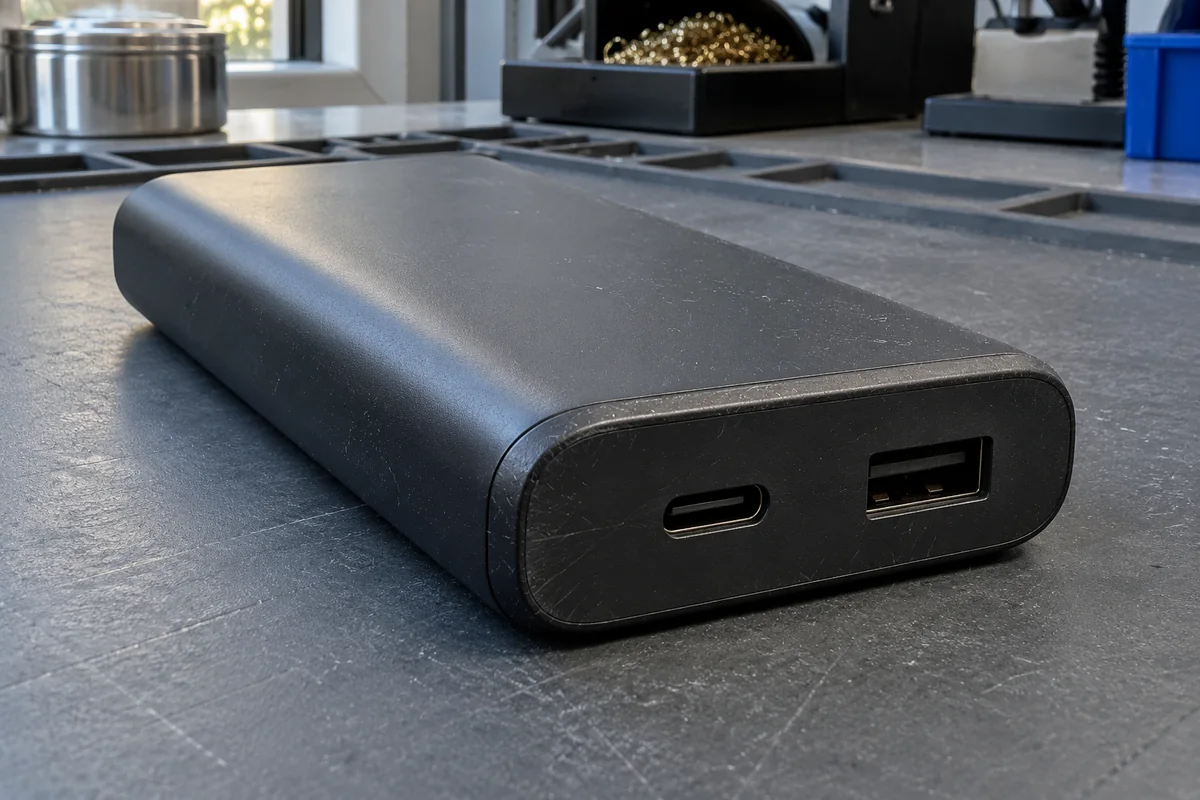
Step-by-Step Physical Inspection: Reading Low-Contrast Model and Serial Strings
Most false negatives happen when an owner misreads a worn laser engraving on a dark matte plastic shell and types the wrong character into the manufacturer’s lookup tool. Run this four-step physical check on each unit:
Step 1: Locate the Regulatory Block on the Casing
- Anker
A1263(PowerCore 10000): Turn the unit to the narrow bottom edge opposite or adjacent to the ports. Look forModel: A1263and a 16-character alphanumeric string labeledSN:. - Anker
A1257,A1642,A1647,A1652,A1681,A1689: Inspect the back panel (including underneath the fold-out kickstand on MagGo models) or the narrow side bezel forModel: A1xxxand theSNstring. - INIU
BI-B41: Flip the power bank over so the paw-print LED side faces down. Look near the lower back edge forModel: BI-B41and a six-character alphanumeric code printed below the regulatory icons.
Step 2: Shoot an Angled Smartphone Macro Photo Before Typing
Dark gray laser etching on black polycarbonate or anodized aluminum washes out under direct overhead light. Hold a flashlight or desk lamp at a 20-to-30-degree raking angle across the surface, take a close-up photo with your phone, and zoom in on the image. Keep this unedited photo—you will need to upload it if the unit qualifies for a recall claim. This documentation discipline mirrors the physical label workflow we use in our Samsung charger authenticity evidence guide.
Step 3: Apply Manufacturer Character-Disambiguation Rules
Anker and INIU use completely different serial formats, and confusing a numeral for a letter will cause an online serial checker to return an invalid or “not affected” result:
Scroll horizontally to see all columns.
| Manufacturer & Notice | Serial / Batch Format | Excluded or Easily Confused Characters | Verification Rule |
|---|---|---|---|
Anker (A1263, A1257, A1642, A1647, A1652, A1681, A1689) |
Multi-character alphanumeric SN string printed on bottom, side, or back |
Target serial numbers never contain the letters O or I. Watch for confusion between 0 (zero) and O, 1 (one), L, and I, and 2 and Z. |
Replace any suspected letter O with numeral 0 and any suspected letter I with numeral 1 or letter L before submitting on Anker’s portal. |
INIU (BI-B41 under CPSC #26-135) |
6-character batch code printed on lower back | Only 000G21, 000H21, 000I21, and 000L21 are recalled. Codes ending in 25, 24, 23, 22, 20, 19, 18, or 17 are excluded. |
Unlike Anker, INIU’s recalled batch list explicitly includes the uppercase letter I in 000I21 and L in 000L21 at the fourth character position, followed by 21. |
Step 4: Handle Worn or Unreadable Serial Numbers via Order Invoices
Pocket abrasion frequently rubs off the bottom-edge printing on older 2016–2022 power banks. Do not discard a unit just because the serial string is illegible:
- For INIU
BI-B41: INIU states that if the serial number is missing or unreadable on a black or blueBI-B41purchased on Amazon USA between August 2021 and April 2022, you can submit your Amazon proof of purchase together with a photo of the physical product atiniushop.com/pages/recall-b41for manual verification. - For Anker
rc2506(A1257,A1647,A1652,A1681,A1689): Anker’src2506instructions allow you to verify eligibility using either the unit’s serial number or your proof of purchase (order invoice/receipt) on the claim form.
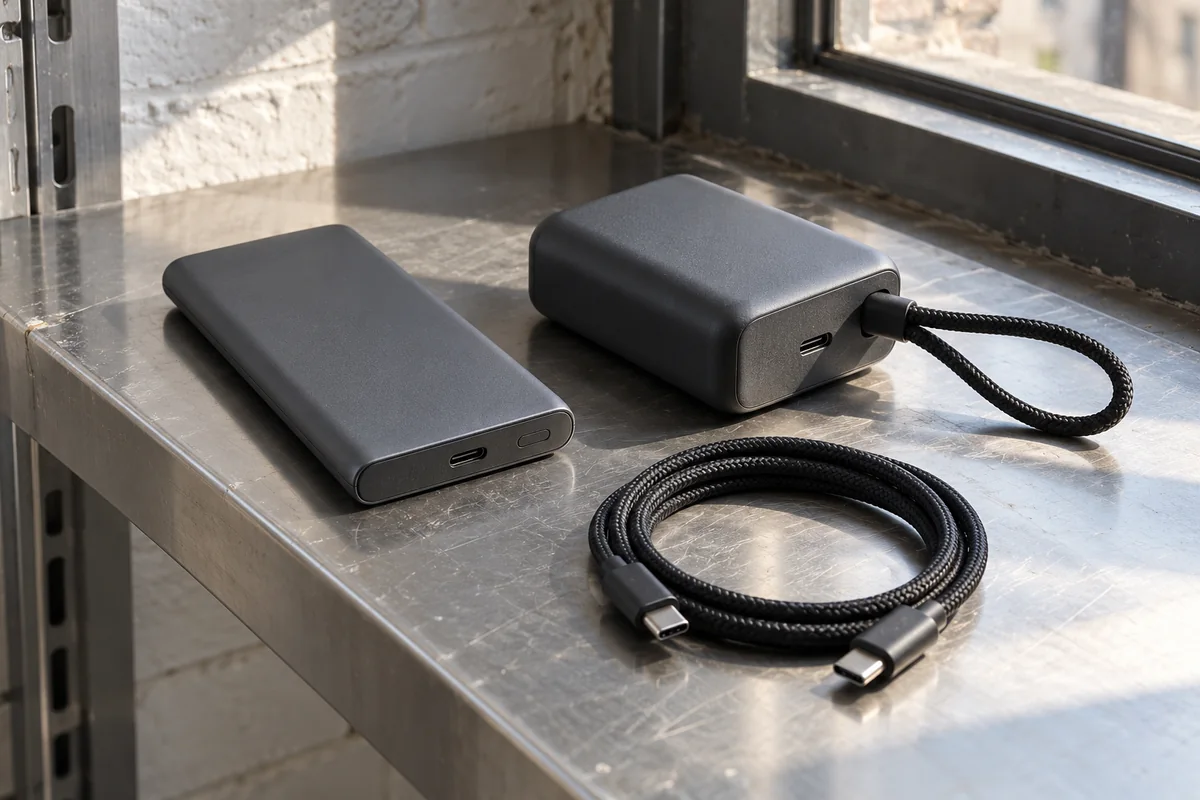
Claim Documentation Trap: Why You Must Not Discard the Unit Early
Every active CPSC and manufacturer recall notice warns owners not to throw the power bank away before claim eligibility is confirmed. Disposing of the battery pack before photographing it and completing the portal submission can forfeit your replacement or refund.
Compare the required claim evidence across the three active portals before marking or recycling a unit:
- Anker
A1263(anker.com/a1263-recall):- Photo 1: A clear photograph showing the printed
Model: A1263andSNon the bottom of the power bank. - Proof of purchase OR marked-unit photo: The CPSC notice requests an order invoice or receipt. If you no longer have the order invoice, Anker’s portal instructions specify submitting a photograph of the recalled power bank with the submission date and the word
"recall"or"recalled"written directly on the casing in permanent marker (for a black battery pack, write the date and"recalled"on a piece of white paper taped onto the housing so it is legible in the photo). - Disposal attestation: You must confirm that you will dispose of the recalled unit in accordance with applicable lithium-ion battery laws before Anker ships the free replacement.
- Photo 1: A clear photograph showing the printed
- Anker
rc2506(A1257,A1647,A1652,A1681,A1689):- Enter the serial number on the online verification form first. Only if the portal confirms that your serial number belongs to the affected cell batch do you proceed to submit your contact details, proof of purchase, and product photo for a full refund or gift card.
- INIU
BI-B41(iniushop.com/pages/recall-b41):- Submit the serial number (
000G21,000H21,000I21, or000L21), your Amazon USA order information, and a photograph of the physical product. Approved claims receive a full refund or Amazon gift card within approximately 15 business days after review.
- Submit the serial number (
While you have your charging kit disassembled to inspect power banks, it is good practice to verify the rating markers on your cords and wall bricks as well—see our USB-C charging and data cable checks and our Samsung charger compatibility checklist.
Quarantine and Regulated Disposal: Household HHW vs. Commercial Inventory Rules
A recalled lithium-ion power bank carries an elevated risk of internal short-circuit, overheating, thermal runaway, and fire. How you store it while waiting for claim confirmation—and where you take it afterward—depends on whether you are a household consumer or a commercial organization clearing an IT or warehouse shelf.
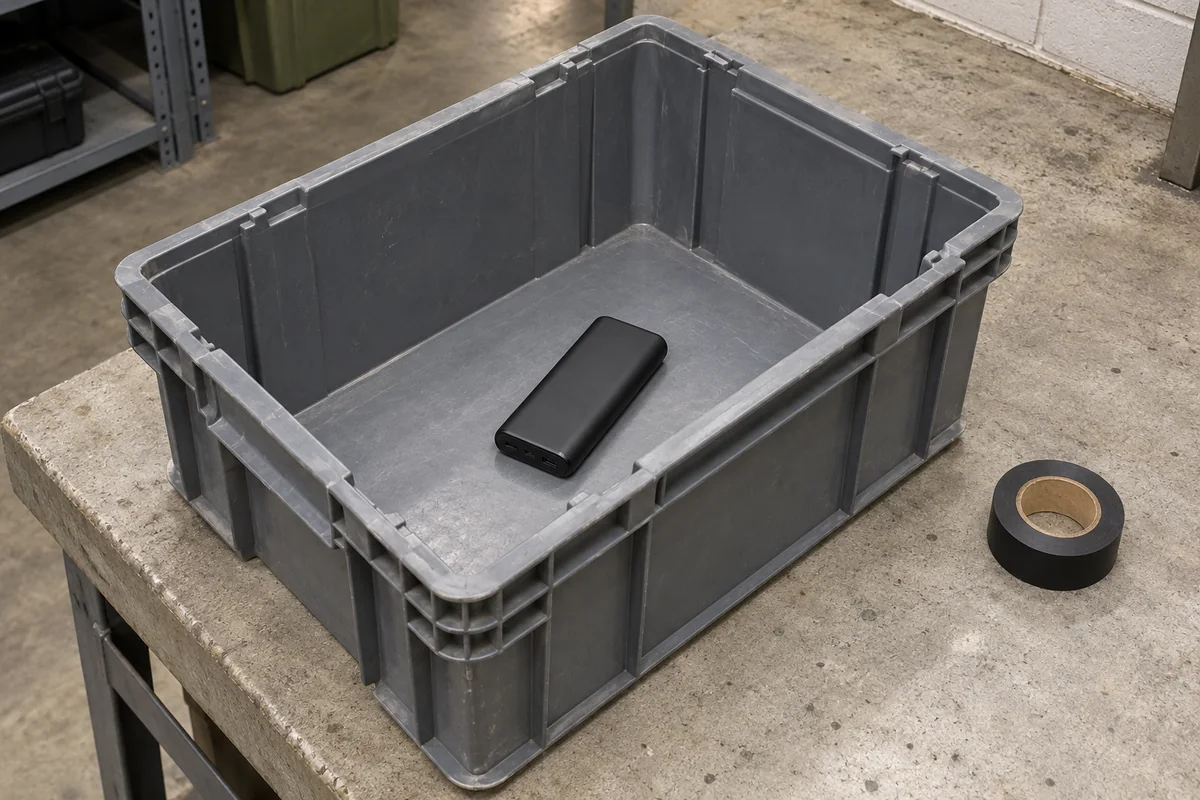
Immediate Quarantine Protocol (Before Disposal)
- Disconnect all cables immediately: Unplug the power bank from wall chargers and remove any attached phones, tablets, or built-in USB-C/Lightning cables from device ports. Do not attempt to drain or charge the battery before disposal.
- Inspect for physical warning signs: If the casing is swollen, bulging, cracked, emitting an odor, or warm to the touch, move it immediately onto a non-combustible surface (such as concrete, ceramic tile, or a metal container) well away from upholstery, carpeting, paper, and other battery packs.
- Isolate terminals: Place clear tape or vinyl electrical tape over the USB-A and USB-C port openings so stray metal objects cannot bridge the contacts during storage or transport.
Household Disposal: Why Retail Battery Drop-Off Boxes Are Off-Limits
Both the CPSC recall alerts (#25-338 and #26-135) and the U.S. EPA guidance on used lithium-ion batteries emphasize three strict prohibitions for recalled lithium-ion power banks:
- Do NOT put a recalled power bank in household trash. Compactor trucks crush lithium-ion cells, triggering garbage truck and material-recovery facility fires.
- Do NOT put a recalled power bank in curbside recycling bins.
- Do NOT drop a recalled power bank into standard retail battery collection boxes at home-improvement, hardware, or electronics stores. Retail drop-off bins are designed for intact end-of-life consumer batteries, not recalled lithium-ion products with known internal cell or soldering defects.
- Required route for households: Call your municipal Household Hazardous Waste (HHW) collection center before driving over, state that you have a CPSC-recalled lithium-ion power bank, and confirm that the facility accepts recalled lithium-ion devices and whether special containment (such as placing the unit in a clear plastic bag or non-conductive container) is required at drop-off.
Commercial, Office IT, and Resale Inventory Rules (RCRA & DOT DDR)
According to the U.S. EPA’s lithium-ion battery regulatory table, the federal household hazardous waste exemption does not apply to businesses, schools, nonprofits, or e-commerce liquidators discarding recalled inventory in bulk:
- Hazardous Waste & Universal Waste status: Because lithium-ion batteries typically exhibit ignitability (
D001) and reactivity (D003), commercial generators must manage discarded units under federal Universal Waste regulations (40 CFR Part 273) or applicable Resource Conservation and Recovery Act (RCRA) generator tiers (such as Very Small Quantity Generator rules when generating 100 kg / 220 lbs or less of hazardous waste per calendar month). - DOT Damaged, Defective, or Recalled (DDR) transport rules: Recalled lithium-ion batteries are regulated in commercial transport under the U.S. Department of Transportation Hazardous Materials Regulations (49 CFR 173.185). Businesses cannot ship recalled units back via standard air or ground parcel services without specialized DDR packaging, hazard markings, and an authorized hazardous-materials carrier or battery recycler.
Per-Unit Recall Verification Register (Blank Worksheet + CSV Download)
Use the blank register below—or download the power bank recall check register (CSV)—to record each physical unit in your household or equipment room before submitting claims or scheduling an HHW drop-off.
Scroll horizontally to see all columns.
| Check Step | Field to Record | Where to Verify | Decision Rule | Your Unit Value | Verification Status |
|---|---|---|---|---|---|
| 1. Brand & Casing Model | Exact printed model code (A1263, A1257, A1642, A1647, A1652, A1681, A1689, BI-B41, or other) and shell color |
Bottom edge, back panel, or side bezel under angled light | Proceed to serial lookup if model matches an active notice; never clear a unit by capacity name alone | Unknown / verify on the unit | Pending |
2. Serial (SN) or Batch Code |
Exact alphanumeric SN or 6-character batch string as laser-etched on the casing |
Macro smartphone photo of bottom or lower-back label | Apply Anker (no O or I) or INIU (000G21 / 000H21 / 000I21 / 000L21) character rules before checking |
Unknown / verify on the unit | Pending |
| 3. Purchase Date & Channel | Retailer name, seller of record, order ID, and purchase date | Online order history or PDF invoice | Confirm sale window and seller scope (for example, Amazon USA Aug 2021 – Apr 2022 vs. Woot exclusion on INIU BI-B41) |
Unknown / verify on the unit | Pending |
| 4. Prior Recall Re-Check | Date and result of any 2024 serial lookup on A1647 or A1652 |
Prior claim record vs. June 2025 anker.com/rc2506 portal |
Re-enter A1647 and A1652 serial numbers on the rc2506 form even if cleared in the 2024 recall |
Unknown / verify on the unit | Pending |
| 5. Claim Photo Evidence | Macro photo of model/SN label plus marked-unit photo ("recalled" + date) if invoice is unavailable |
Official Anker or INIU recall portal | Keep the physical battery pack until required claim photos are uploaded and eligibility is confirmed | Unknown / verify on the unit | Pending |
| 6. Quarantine & Disposal Route | Non-combustible quarantine spot and confirmed municipal HHW or commercial DDR recycler | Municipal HHW phone verification or licensed DDR battery handler | Never place recalled lithium-ion units in household trash, curbside recycling, or retail battery drop-off bins | Unknown / verify on the unit | Pending |
Sources checked
Related articles
Bulk Power Banks: Lot Inspection Before the Recall List
Plan a bulk power bank lot inspection: match model documents, compare capacity ratings, select samples and record output checks before deciding on the lot.
Read article