
Where to Buy Wholesale Electronics: Authorized Distribution, B2B Platforms and Traceability Verification
Procurement guide to wholesale electronics sourcing: authorized distributors vs brokers, component counterfeit checks, escrow terms, and margin targets.
AI-assisted editorial guide; standards and documents are described from the public sources listed at the end, not from laboratory testing. How this guide was prepared
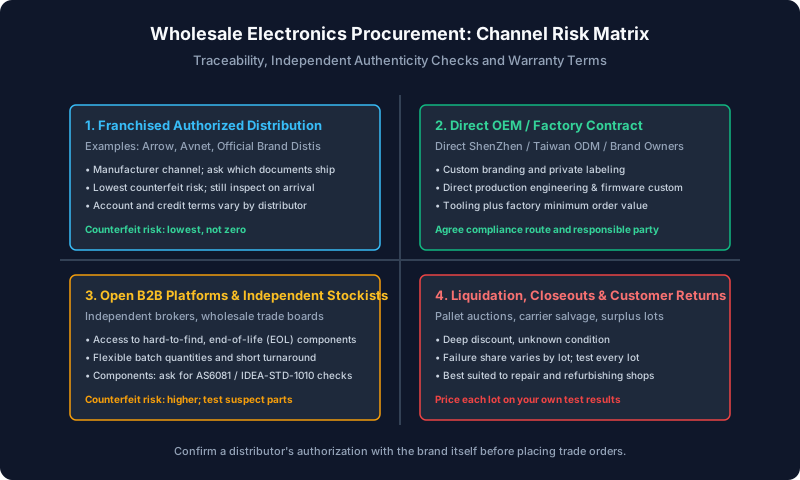
The global market for wholesale electronics—spanning consumer audio, smartphone accessories, computing peripherals, and active electronic components—represents massive commercial volume. However, electronics procurement carries uniquely severe operational hazards: sophisticated counterfeit semiconductors, remarked battery cells, gray-market carrier lockouts, and strict intellectual property crackdowns by brand manufacturers.
Understanding where to buy wholesale electronics requires evaluating suppliers across the four primary distribution tiers, auditing anti-counterfeiting traceability standards, and calculating true landed unit margins inclusive of testing and defect rates.
Scroll horizontally to see all columns.
| Channel | Best fit | Check before ordering |
|---|---|---|
| Franchised / authorized distributor | Current products in normal supply | Brand confirms the distributor’s authorization for your product line |
| Direct OEM / ODM factory | Custom or private-label products at volume | Your specification, compliance plan and inspection terms in the contract |
| Independent stockist / B2B platform | Shortage or end-of-life components | Inspection and test plan agreed in the purchase order |
| Liquidation and return lots | Repair and refurbishing businesses | Your own test results per lot, not the auction discount |
Download the blank wholesale channel record and fill in the channel, the check that channel still needs, and the evidence you saved. The file contains column headings only.
1. The Four Wholesale Electronics Procurement Channels
Electronics buyers source inventory across four distinct supply channels:
Channel 1: Franchised Authorized Distributors
- Profile: Distributors that hold a distribution agreement with the manufacturer. For electronic components these are franchised component distributors (for example Arrow Electronics or Avnet); for finished devices and IT products they are the brand’s authorized distributors (for example D&H Distributing, Ingram Micro or TD SYNNEX for the brands they carry). Authorization is brand by brand, so a distributor’s name alone does not cover every product it lists.
- Traceability Standard: Parts or devices come through the manufacturer’s own channel, usually in original manufacturer packaging, and the distributor can document where they came from. Ask which documents ship with each order.
- Commercial Reality: This is the lowest-risk channel for counterfeits because the chain runs straight back to the manufacturer, but it is not a guarantee: still inspect incoming goods and keep the paperwork. Warranty coverage is whatever the manufacturer’s warranty and the distributor’s terms of sale state. Account requirements such as credit history, minimum orders and payment terms vary by distributor; ask for them before you plan volumes.
- Verification Protocol: Confirm the authorization with the brand itself, using its published partner or distributor locator where one exists, or a written reply from the brand’s channel team for your country and product line.
Channel 2: Direct OEM / ODM Contract Manufacturing
- Profile: Contracting directly with original equipment manufacturers (OEMs) or original design manufacturers (ODMs) in manufacturing hubs (Shenzhen, Dongguan, Taiwan, Vietnam).
- Commercial Reality: Can lower the unit cost at volume and allows custom branding, unique industrial tooling, and proprietary firmware.
- Trade-Offs: Requires upfront capital for tooling and the factory’s minimum order value (quoted per project), international freight, customs and tariff management, and pre-shipment inspection at the AQL sampling levels written into your purchase contract. Settle product compliance in the contract: for each market, which authorization route applies, who the responsible party is, and whether any existing authorization (such as the factory’s FCC grant) validly covers your model and brand name.
Channel 3: Independent Stocking Distributors and B2B Trade Platforms
- Profile: Independent stocking brokers and verified B2B marketplaces (such as Sourcengine, Netcomponents, TradeKey) operating in the open market.
- Role in Sourcing: Critical during semiconductor allocation crunches, supply chain bottlenecks, or when sourcing discontinued end-of-life (EOL) components.
- Risk Mitigation: The open market contains recycled, remarked and cloned components. For electronic components bought this way, ask whether the supplier works to the recognized counterfeit-avoidance standards: SAE AS6081 (Fraudulent/Counterfeit Electronic Parts: Avoidance, Detection, Mitigation, and Disposition — Distributors) for the distributor’s purchasing and inspection program, IDEA-STD-1010 for visual inspection of open-market components, and SAE AS6171 for the laboratory test methods (such as X-ray, XRF and decapsulation) used on suspect parts. Agree in the purchase order which inspections and tests apply to your parts. These standards are written for components; they do not certify finished consumer devices bought from a B2B platform, which need the checks in section 2 instead.
Channel 4: Liquidation Auctions and Customer Return Lots
- Profile: Bulk liquidation platforms auctioning retailer return pallets, overstock surplus, and carrier insurance salvage.
- Commercial Reality: Lots sell well below original retail price, but the discount buys unknown condition. The share of non-working units varies by lot, source and manifest accuracy, so price a lot against your own test results, not the auction’s headline discount.
- Operational Reality: Returned devices can arrive with damaged or deeply discharged lithium-ion batteries, missing accessories and power supplies, or, for phones, carrier blacklisting or an activation lock tied to the previous owner’s account. Best suited for refurbishing shops with in-house diagnostic and repair benches. For graded and refurbished stock, see the refurbished electronics buying guide. Before you bid on a manifested lot, use the electronics liquidation manifest checklist to attach that auction’s own grade definition and the evidence for each row.
Takeaway: Pick the channel by what you are buying (current product, custom product, shortage part or returns) and plan the check that channel needs.
2. Anti-Counterfeiting and Authenticity Verification
Counterfeit electronics do not merely result in customer returns; they can be safety hazards (for example, lithium batteries built without the protection a genuine pack has). Use three checkpoints, and match each one to what it can actually prove:
- Certificate of Conformance (CoC): A supplier’s signed statement that the shipped items conform to the requirements of your purchase order or contract (part number, quantity, specification, packaging). The US federal acquisition clause FAR 52.246-15 uses it in exactly that sense. A CoC is only as good as the requirements you put in the order and the party who signs it, and it is not a regulatory approval: check the FCC authorization path that applies (an FCC ID in the FCC’s equipment authorization records for certified devices, or the compliance information and US responsible party supplied under the Supplier’s Declaration of Conformity procedure), the EU Declaration of Conformity for CE marking, a UL listing in UL’s own certification directory, and RoHS through the manufacturer’s declaration, each separately.
- Moisture Barrier Bags (MBB) for moisture-sensitive parts: Under IPC/JEDEC J-STD-033, surface-mount devices rated MSL 2 through 5a ship dry-packed: sealed in a moisture barrier bag with desiccant and a humidity indicator card, with a moisture-sensitivity label. MSL 1 parts do not require dry packing, and MSL 6 parts must be baked before use, so follow the manufacturer’s label for those. A missing or opened dry pack on a part that should have one is a reason to quarantine it and ask the supplier, not proof of counterfeit on its own.
- Serial Number and IMEI Validation: For finished consumer devices, require an electronic manifest with serial numbers (and IMEIs for phones). Check IMEIs against a device-status (blacklist) service before paying the balance, and spot-check serials with the brand’s warranty or support lookup where it offers one.
Takeaway: Treat each document as proof of one thing only, and check regulatory approvals through the route that applies to the product: the regulator’s or certifier’s records, or the declaration and compliance information that come with it. For the wider supplier review, use how to evaluate a supplier and the first-order risk checklist.
3. Total Cost Modeling in Wholesale Electronics
A lower wholesale quote can cost more per sellable unit once freight, duties, testing and failed units are counted. Compare channels on cost per working unit:
True Cost per Working Unit = (Invoice Cost + Inbound Freight + Customs Tariffs + Testing/Refurb Labor) / (Delivered Units × (1 - DOA Defect Rate))
Scroll horizontally to see all columns.
| Channel | Typical Margin | Counterfeit / DOA Exposure | Required Verification |
|---|---|---|---|
| Franchised Authorized Distributors | 8% to 18% | Minimal (factory-sealed chain of custody) | Manufacturer partner locator and Certificate of Conformance (COC) |
| Direct OEM / ODM Manufacturing | 20% to 45% | Spec drift or batch variance if uninspected | Pre-shipment inspection (AQL 1.5 / 2.5) and sealed golden sample |
| Independent Stockists & Brokers | 12% to 30% | Elevated open-market remarking risk | IDEA-STD-1010 / AS6081 microscopy, XRF, and acetone screening |
| Liquidation & Customer Return Lots | Variable | 25% to 40%+ DOA and lockouts | Bench diagnostic triage, IMEI blacklist check, and battery health test |
Worked Example (hypothetical figures)
All numbers below are assumptions chosen to show the arithmetic, not market prices or measured failure rates. A reseller buys 100 wireless audio sets from a liquidator at $15.00 / unit ($1,500 total). Freight costs $150, there is no duty on this domestic lot, and bench testing costs $2.00 per unit ($200 for 100 units). Testing finds 25 units that do not work. The 75 working units carry a real cost of:
True Cost = ($1,500 + $150) / 75 = $22.00 per working unit
If authorized broadline distribution sells 100% brand-new, factory-warranted units at $21.00 / unit with zero defective scrap and zero hours wasted on bench testing, the authorized channel delivers a lower effective cost per working unit and eliminates intellectual property liability.
Sources and related procurement tools
Use the supplier verification worksheet alongside How to Verify an Electronics Supplier, Electronics Total Cost vs Unit Price, and the First-Order Risk Checklist to document channel checks before releasing a deposit. Primary industry references include the Electronic Components Industry Association (ECIA) standards and Trade.gov Incoterms and import tariff guidance. Browse the complete guide library for all companion worksheets.
Sources checked
Related articles
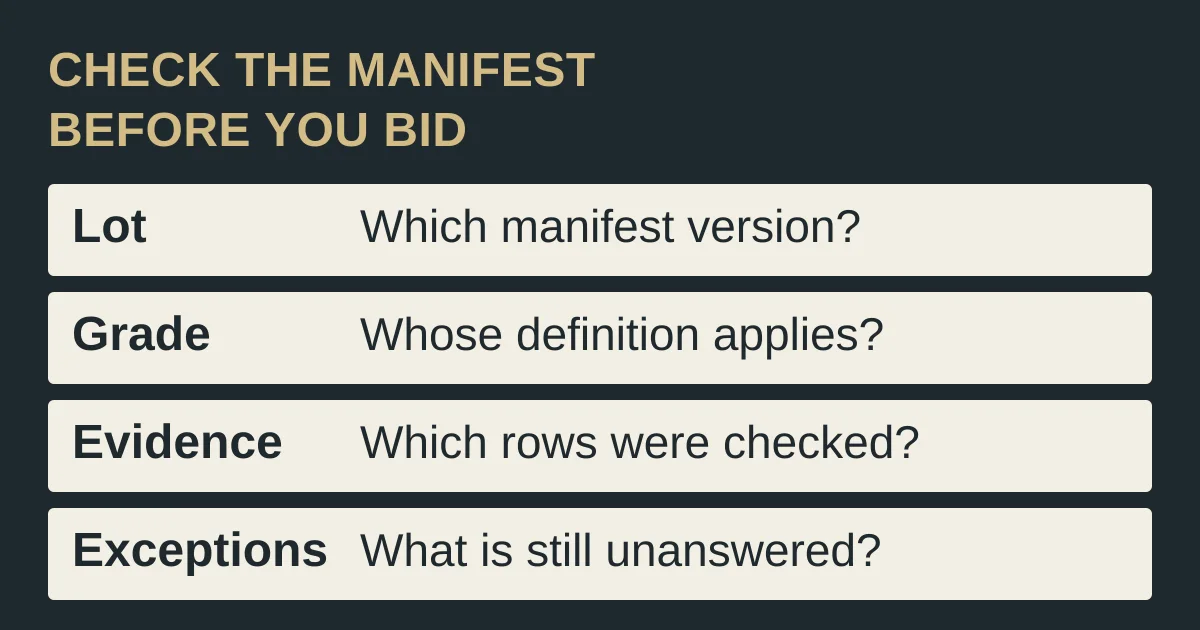
Electronics Liquidation Manifest Checklist Before Bidding
Check each liquidation manifest row before bidding: the auction's own grade, the evidence for that row, and any stop condition.
Read article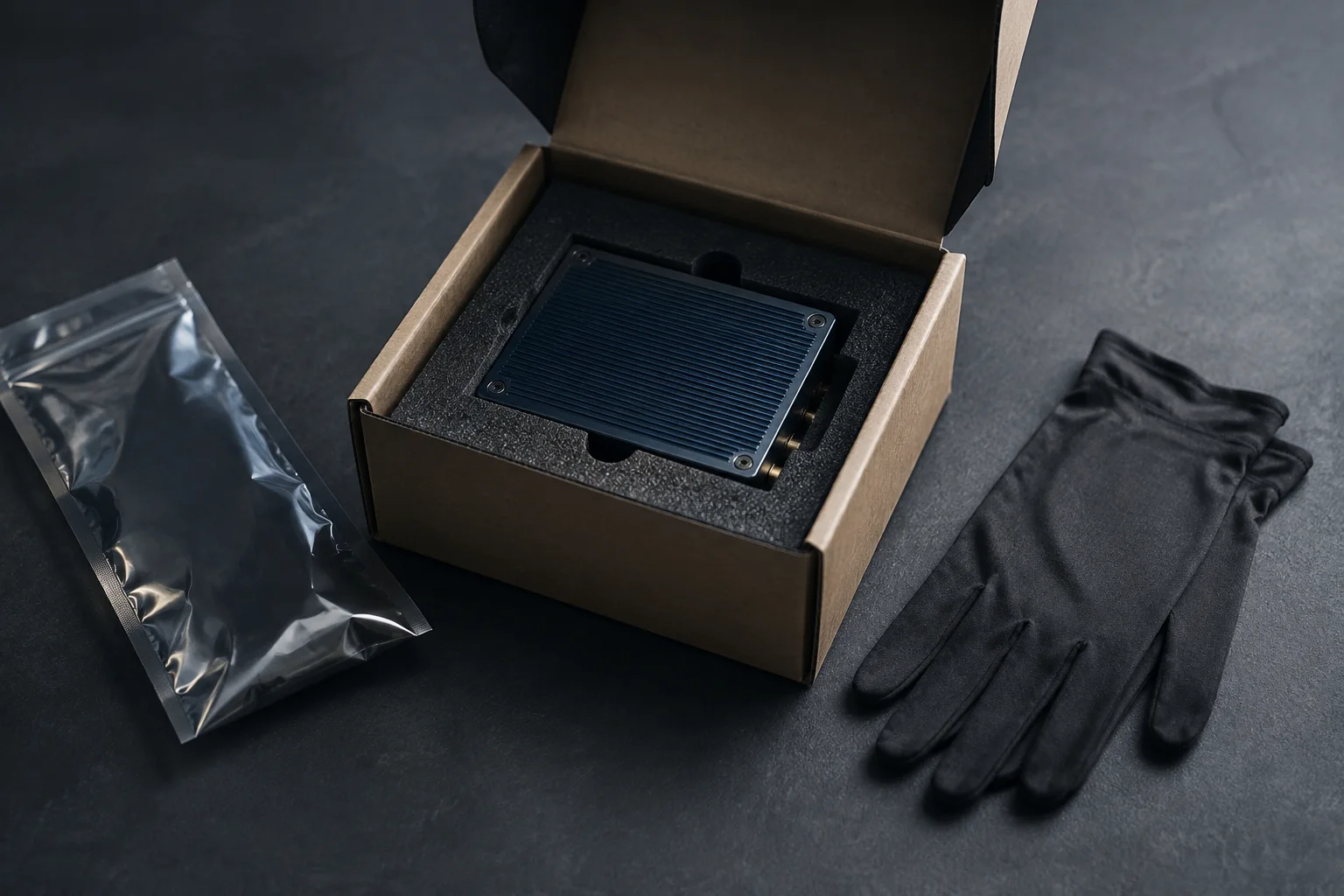
First-Order Electronics Buying Checklist
Use an electronics first-order checklist to freeze model details, verify payment changes, inspect the shipment and document shortages or defects.
Read article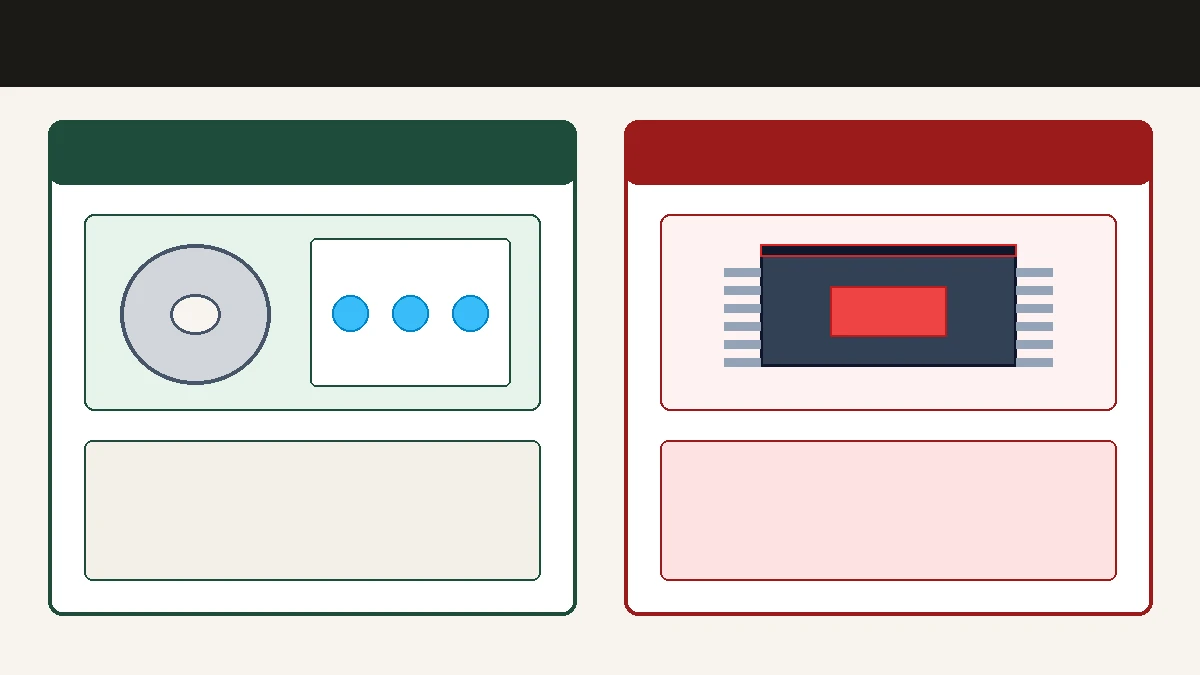
Authorized Distributors vs. Component Brokers: ECIA, CoC & IC Lab Tests
Compare franchised distributors (Mouser Electronics, DigiKey, Arrow) with open-market brokers to prevent counterfeit IC failures: verify SAE AS6496 CoC, MSL 3, and AS6171.
Read article