
Samsung Brand Guide: Galaxy Series
Use Samsung’s company, product and support material to distinguish the Galaxy family, an exact model, and the seller’s separate offer claims.
AI-assisted source check; independent human expert review not recorded. Research methodology
Samsung Electronics Co., Ltd. was established in 1969, according to the company’s corporate overview. For product research, the more immediate question is not simply whether an offer says “Samsung,” but which Galaxy product, hardware variant, market and support path it actually identifies. Brand, series, model number, serial number and IMEI are related labels with different jobs.
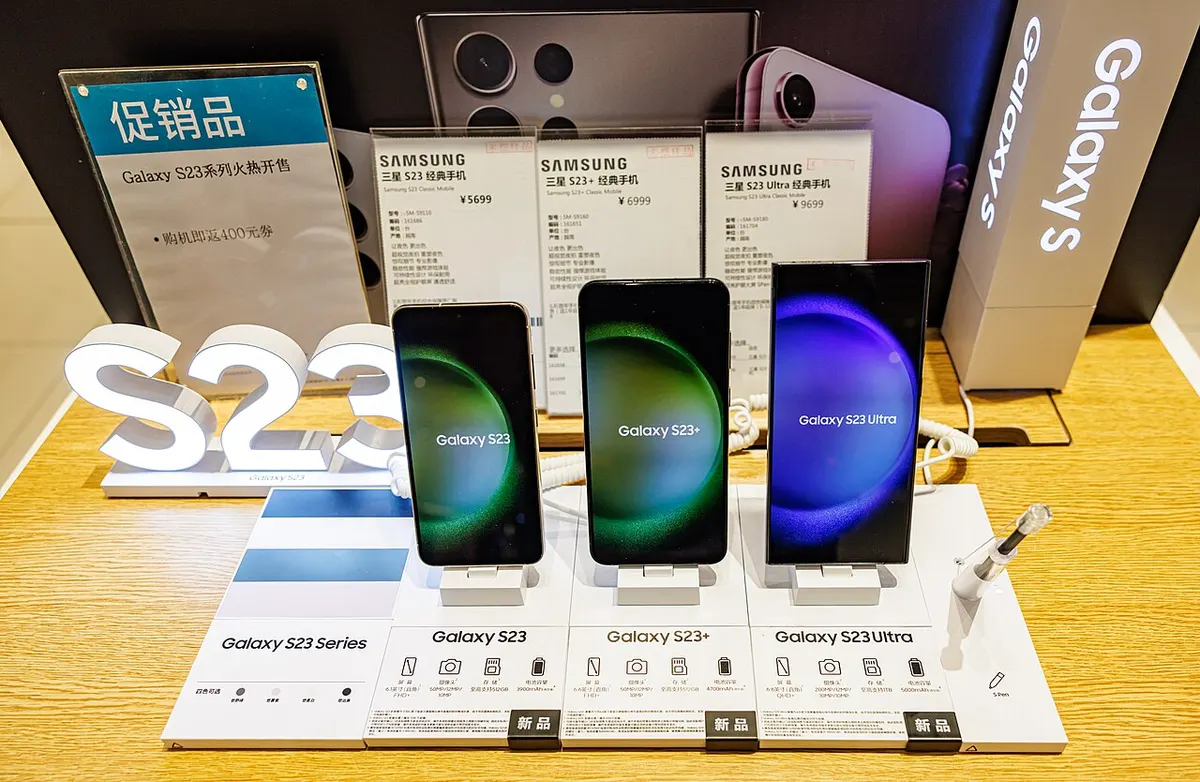

Begin with a model identity record
Samsung’s support guidance distinguishes the model number, serial number and IMEI. It says that the model number identifies a specific device variant, while the serial number identifies a unit and the IMEI is tied to phone hardware. Those distinctions matter when comparing an offer. The seller’s title and a photo of a phone are not substitutes for a model identifier, and a serial number should not be published in a shared comparison.
Record the exact model name, model number, storage/RAM claim, colour, network or carrier claim, destination market, condition and the source for each field. Then keep the seller’s stock code in another field. If the offer calls a device “unlocked,” ask which network restrictions or support assumptions that word is intended to address; do not transform it into a blanket compatibility claim.
| Identifier | Useful for | Do not use it alone to prove |
|---|---|---|
| Galaxy series name | Broad product family | Exact configuration |
| Model number | Variant research | Unit ownership or warranty eligibility |
| Serial number | A particular unit | The general specification sheet |
| IMEI | Cellular-device identity | A public catalogue entry |
| Seller SKU | The seller’s inventory handling | Samsung model identity |
Treat A, M and S as starting points
Samsung’s own regional buying guides describe the Galaxy S line as its premium or flagship range and Galaxy A as a mid-range range. A Samsung Mexico guide describes Galaxy M as a range oriented toward long battery life and value. These are useful high-level descriptions, but they are not a reliable decoder for every generation, regional release or specification. Samsung also states in its support material that models can vary by country.
The Galaxy A, M and S guide therefore focuses on a decision process rather than declaring a universal hierarchy. Start with the exact device and country-specific support or product page. Compare the few requirements that decide the task: network support, storage, expansion, camera function, display, security, update policy, charging and local service. Do not select a series first and infer every individual specification from its reputation.
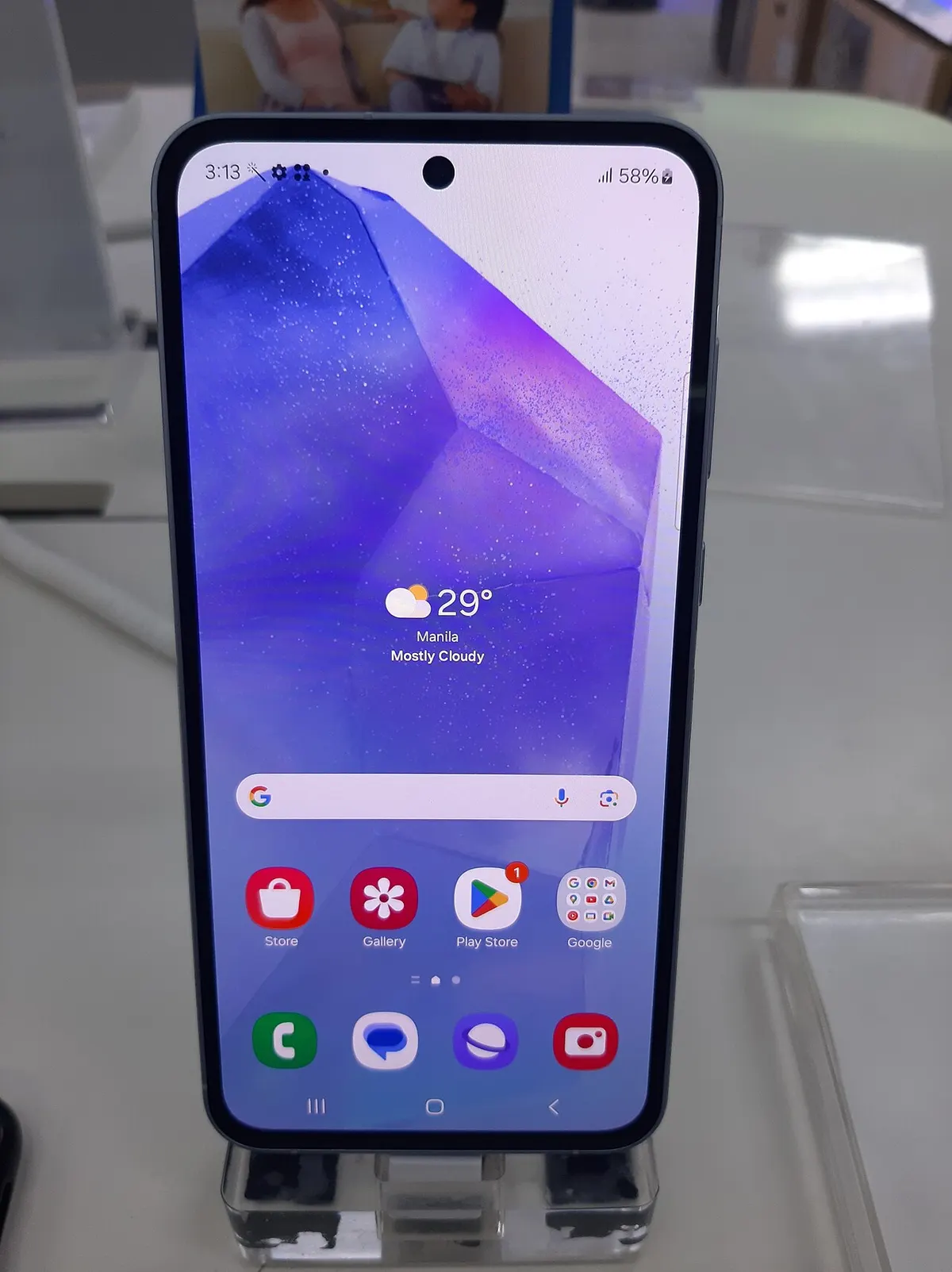

Compare a device against the right official page
Samsung’s UK support article comparing Galaxy S25 and Galaxy A series gives model-specific examples and includes an explicit market warning. Its tables are useful because they show how closely named lines can differ in display, camera, memory, storage and water-resistance information. The table is not a guarantee that a similarly named device in another market has the same configuration.
For every row in your own matrix, retain the exact page URL, page date where given, the variant it names, and the question it supports. The specification comparison guide gives a reusable method. If a source only mentions a series, label the row “series-level source” rather than presenting it as proof for a unit model.
An illustrative comparison might include two offers called “Galaxy A55 5G.” One supplies a model number and country-specific product page; the other supplies only a listing title. The first has stronger starting evidence, but it does not prove that the seller owns the listed stock. The second is not automatically wrong; it remains incomplete until the missing identification material is supplied.
Inspect regional and post-sale claims separately
Regional wording can affect the documentation that applies to a device, but a market label alone is not a promise about every service. Ask the seller to identify the claimed destination market and the exact product model. Then check an official product or support page for that market and preserve any stated qualification. Package language, charger format, mobile bands, software features, local service and warranty handling can require separate evidence.
If a unit must be used with a carrier or managed business system, confirm the actual requirements with the relevant provider. This guide cannot validate a particular SIM, carrier, enterprise policy or warranty claim. It can keep the questions visible before a decision is made.

Move from brand research to a controlled order
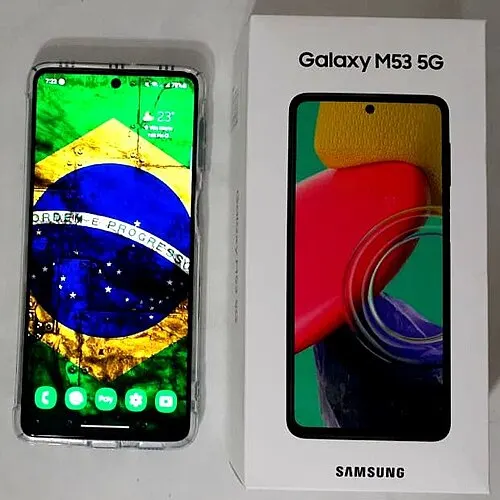
The photographed Galaxy devices on this page are historical, openly licensed reference photos. They do not show the current specification of an offer, and they are not supplied by Samsung for this site. Use them only as visual context. The product record you rely on should still name the model and market in the official source.
Once the product identity is sufficiently clear, investigate the seller’s role separately. The channel-role guide explains why distributor, wholesaler and reseller labels describe a business position rather than product authenticity. The supplier evidence worksheet helps keep business identity, item identity and payment-related checks distinct.
At receipt, compare what arrived with the agreed written specification, not merely with a generic Galaxy image. Record the observed model information privately and retain the order records needed for a later question. The first-order checklist covers the handover from an approved offer to delivery and receipt.
Scope and limits
This is not a current buying recommendation or a global Galaxy specification database. ElectronicSeek does not test Galaxy devices, verify individual sellers or determine warranty eligibility. Samsung’s public content may change, and a regional page’s claims remain limited to its stated context.
Use the Mobile Phones category for a product-research starting point, then read Galaxy A vs M vs S for the series-level workflow. The article’s sources were checked on the date shown above; independent human expert review has not been recorded.
Use this brand profile as a research record
A brand profile is a map of questions, not a certification of every product sold under a familiar name. Start by separating what the company’s official material says from what an offer says. Corporate history and product-category pages can establish useful context. They usually cannot identify the configuration in a seller’s carton, confirm the seller’s commercial relationship, or promise service in the buyer’s country. Keep those claims in different columns of your notes.
For a specific product, make a dated record of the listed product name, model number, claimed market, capacity or configuration, condition, included accessories and supplier identity. Attach the manufacturer document that supports the product fact and the offer document that supports the transaction fact. When the two documents describe different versions, do not harmonize them by guesswork. Record the mismatch, state who needs to answer it, and defer a conclusion until the relevant evidence arrives.
Minimum evidence before comparing offers
- An exact product or model reference, not only a product family name.
- A current manufacturer, support or compliance source that addresses the required feature.
- A stated market or destination where regional behaviour matters.
- A written seller offer identifying condition, quantity and included items.
- A separate record of the entity invoicing, receiving payment and handling a remedy.
This structure is deliberately conservative. It avoids turning a widely recognized brand into an unsupported answer about an individual item. It also makes a later correction easier: another reader can see which source was used, what it supported and what remained unknown. When a source changes, revisit the affected conclusion rather than merely changing the page date.
When the records conflict
Do not decide that one record wins because it has a more attractive product photo, a lower price or a longer description. Compare the exact product identifier, publisher, date, stated market and the question each document is able to answer. A manufacturer support page may be the strongest source for a device procedure, while the seller’s written offer is the relevant source for its promised condition and quantity. They describe different facts. A conflict can sometimes be explained by a regional variant, an old document or a listing error, but it should remain a recorded conflict until evidence resolves it.
Save a copy or link to material that directly affected a decision, together with the access date. If a commercial document contains confidential details, retain it in the buyer’s own controlled records rather than uploading it to a public service. This publication has no document-submission or purchase-order facility. Where the stakes of a decision are high, use the responsible manufacturer, counterparty, carrier, provider or qualified adviser for the final confirmation.
Continue upward to Brands to choose another record, or use the linked category and sourcing guides to move from product identity to an actual offer. Do not publish private unit identifiers, invoices, payment details or configuration files in a shared research record.