
Check IMEI Number: What a Wholesale Lot Check Does Not Prove
Check IMEI numbers before accepting a wholesale phone lot. Separate blacklist results from finance, activation locks, repair history and carton coverage.
To check an IMEI number before accepting a wholesale phone lot, match the identifier to the handset and save the named service’s dated response. A clean blacklist result answers a database question; ownership, unpaid balances, account activation and repair provenance require separate evidence.
A wholesale IMEI check is useful when you know which identifiers were submitted, what the report covers and when it was run. Acceptance also depends on matching those identifiers to the phones in the cartons, completing the agreed activation checks and resolving seller finance or repair claims. Keep the untested quantity visible: several passing phones cannot establish the status of every handset in a mixed lot.
Before releasing an order:
- Match each checked phone to its private handset and carton record.
- Keep blacklist, carrier finance, account activation and repair findings separate.
- Record lookup coverage and physical inspection coverage independently.
- Hold unresolved units and agree the remedy for later status changes.
Use the mobile-phone verification guide to establish the exact model, market and condition required before comparing lot offers.
What does a clean IMEI result actually prove?
It establishes what the named service returned for the submitted identifier at the query time. Read “clean” together with the service’s coverage and result definitions, then collect the other evidence needed for acceptance.
Scroll horizontally to see all columns.
| Purchase question | Evidence to keep | What remains after a clean blacklist result |
|---|---|---|
| Was this identifier reported lost or stolen? | Service name, submitted IMEI, exact response, query time and coverage | Later reports or delayed uploads can change the finding |
| Is this the handset offered? | Device-displayed identifier matched to model, serial and carton record | The supplied manifest still needs to be reconciled with the physical phones |
| Is carrier finance settled? | Unit-linked payoff or account-holder evidence through the relevant carrier process | Carrier billing restrictions and outstanding obligations need separate resolution |
| Can the buyer activate it? | Result of setup after the agreed erase/reset, plus any organizational release evidence | Prior-owner account protection and enterprise management must be checked on their own terms |
| What was repaired? | Supported on-device parts history and unit-linked service records | Part condition, repair scope and provenance require their own inspection |
Stolen Phone Checker’s Terms of Use and Disclaimer, clauses 2–4, explain both status changes after a query and carrier billing restrictions outside the GSMA Block List. Preserve an unavailable or inconclusive response as unresolved; do not convert it into a clean result in the purchasing spreadsheet.
Match the IMEI to the phone, then to the carton
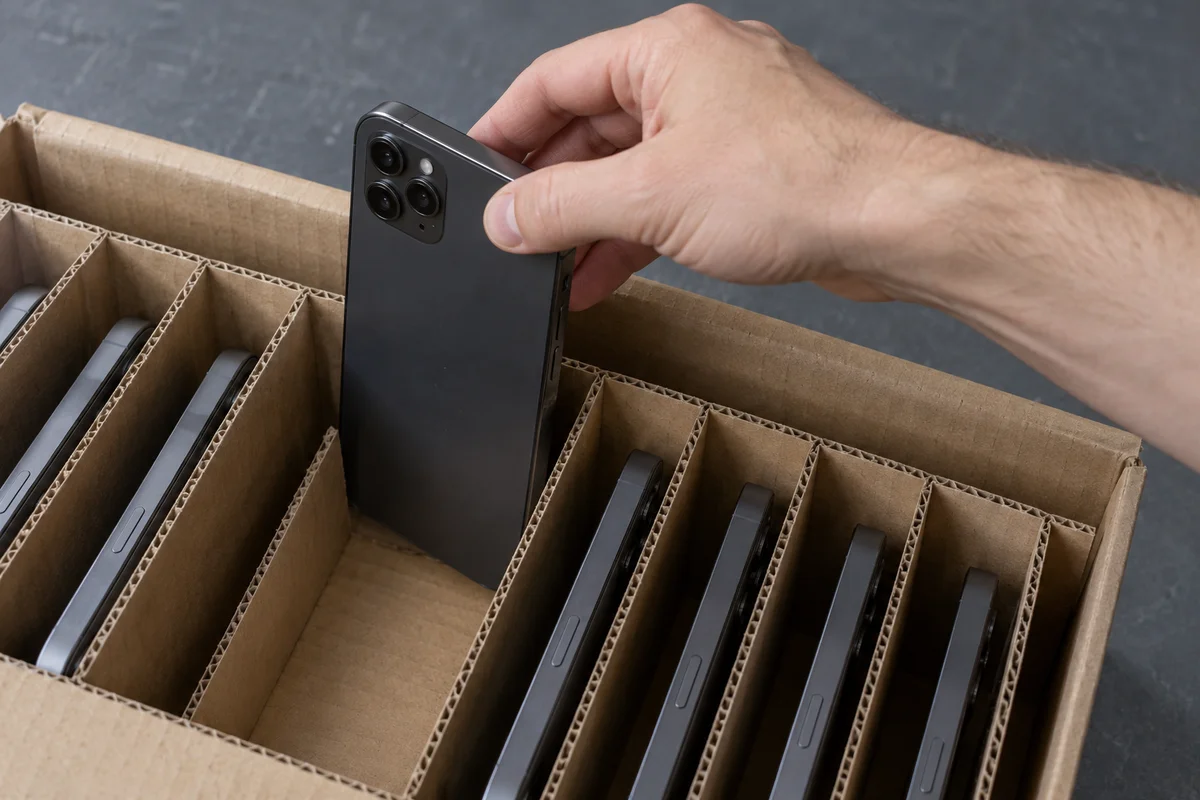
Collect the identifier from the handset’s device-information screen using its manufacturer’s instructions, and reconcile it with the seller’s manifest before relying on the report. A correct lookup against the wrong list of devices leaves the shipment unchecked.
- Create a private record for each handset containing its model code, serial, all relevant IMEIs, lot ID and carton ID.
- Compare the identifiers displayed by the device with the supplied record. Keep multiple IMEIs attached to the same handset so query rows are not counted as separate phones.
- Compare the returned model with the device and offer. Hold a mismatch or duplicated identifier for reconciliation before continuing the acceptance process.
- Record substitutions and recheck the replacement handset against the revised manifest.
GSMA’s Terms and Conditions for TAC Allocation define the TAC as the first eight IMEI digits and associate TACs with device models. A model can have more than one TAC. Use that relationship to investigate model mismatches; checking the TAC does not establish which replacement parts are now inside the phone.
Can a free IMEI blacklist check cover a wholesale lot?
Choose a service whose access terms permit commercial use and whose report covers the questions in your order. “Free” describes the price of a particular lookup, not its geographical coverage, data fields or permission to process wholesale inventory.
The US consumer Stolen Phone Checker service limits free use to noncommercial purposes and five searches per 24 hours. Its consumer allowance is therefore unsuitable as a wholesale checking workflow. Arrange an appropriate commercial route and retain the scope of the report purchased.
Report capabilities also differ. GSMA’s Device Check description includes ownership and financial claim flags. When those fields are available, retain them and investigate any flag with the seller. A claim flag and a carrier account’s settled balance answer different questions; ask exactly which contributed data the report includes.
How long can a status change take to appear?
Keep the query timestamp and agree rechecks near dispatch and receipt. Stolen Phone Checker’s terms say an upload after a lost/stolen or found report can take 24 hours or longer; the owner may also take time to report the event. Waiting a day does not turn an earlier result into permanent clearance.
Agree in writing how a later adverse report will be handled: which unit records identify the affected phones, what supporting evidence is required and what return or replacement remedy applies. Rechecks reduce the age of the information available for the decision, while the order terms address what happens afterward.
Does clean mean paid off or carrier unlocked?
No. Keep finance evidence and current carrier-lock status separate from the blacklist finding. Clause 4 of Stolen Phone Checker’s terms describes carrier billing restrictions that can exist without an entry on the GSMA Block List.
AT&T’s general Unlock requirements separately address device payoff, current account standing and lost/stolen/fraud status. For an AT&T-origin lot, obtain evidence appropriate to that carrier’s process; for another origin, use that carrier’s requirements. An unlocked setting alone does not establish the seller’s private account balance.
For the destination-network decision, continue with carrier-unlocked phone band and eSIM verification. Keep that compatibility result alongside the IMEI and finance findings.
Test account activation and enterprise release separately
Complete the agreed setup test on the device after the authorized erase/reset. A database response cannot substitute for observing whether setup requires a previous owner’s account or an organization’s intervention.
For iPhone: Apple’s If you want to buy a preowned iPhone says an erased device showing Hello must be set up, including activation, before testing. A Hello-screen photo is therefore a starting-state record. If the device shows iPhone Locked to Owner, have the seller resolve Activation Lock through the authorized owner before acceptance.
For Android: Google’s Help prevent others from using your device without permission explains that device protection can require a previously associated Google Account or screen credential following a reset. Have the authorized seller prepare the device for transfer, then follow the relevant manufacturer’s setup procedure and record the outcome. A reset by itself is insufficient evidence of buyer access.
For former business devices: ask who controls organizational enrollment and obtain release evidence tied to the device. Apple’s Release devices in Apple Business describes releasing a device from the organization, checking its Released status, then erasing and restoring it. Resolve any Activation Lock that depends on the organization’s management before release: Apple says that management route is unavailable afterward.
Record the observed setup outcome and the release evidence separately. If a phone still requires prior-owner credentials or organizational action, hold it until the authorized party resolves the issue and the setup test can be completed.
Check parts history alongside physical condition
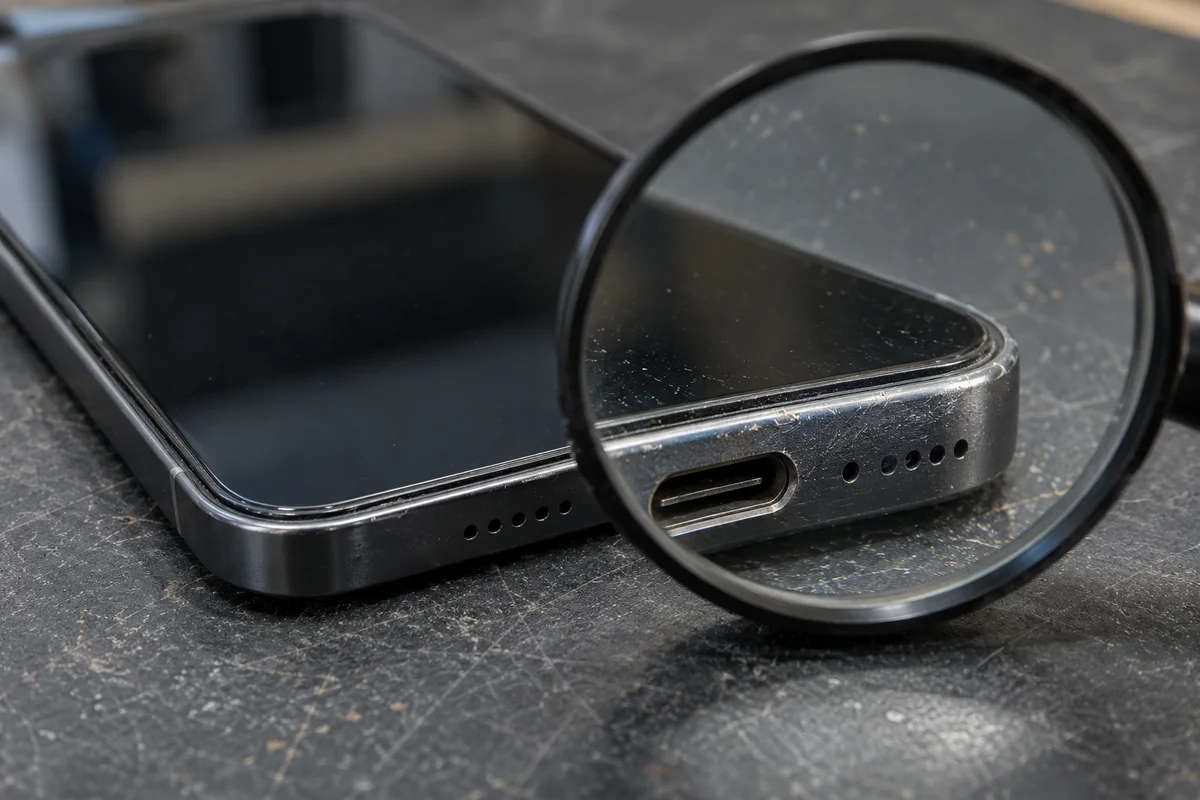
Inspect the handset and read its supported parts history before accepting the advertised repair or condition grade. A blacklist result supplies no inspection of the glass, connector, battery or replacement components.
On supported iPhones, open Settings → General → About and examine Parts and Service History. Apple’s dedicated iPhone Parts and Service History guidance, dated October 22, 2026, describes Genuine, Used, Unknown and Unverified messages. Coverage depends on the model, software and component.
Scroll horizontally to see all columns.
| Finding | Purchasing action |
|---|---|
| Genuine or Used | Compare the reported repair with the seller’s description and the agreed condition grade |
| Unknown | Investigate the component and repair record; Apple lists several causes, including verification or functional problems |
| Unverified logic board | Obtain repair details and check the affected functions before acceptance |
| No relevant history displayed | Check what that model and software support, then use inspection and service documents to assess the repair claim |
An Unknown message is not a unique diagnosis of a counterfeit part. Likewise, an empty history does not establish that all components are original. Apple also states that only the most recent service appears when the same part has been serviced more than once. Ask for repair invoices or parts records linked to the individual handset when repair provenance affects the purchase.
How should you record checks across cartons?
Track database lookup coverage, physical identifier matching and activation testing separately. A complete manifest query can coexist with limited physical inspection, and the order record should make that difference clear.
Before selecting phones, group the lot by model, source, condition and carton. Agree the selection method, number of units to inspect, acceptance conditions and what happens when a problem is found. Select across those groups instead of checking only the first and last entries on a packing list.
For each carton, record its actual handset count and the distinct handsets checked:
Physical-match coverage = handsets with a completed device-to-manifest match ÷ actual handsets in that carton.
Record activation-test coverage using the count of handsets that completed that test. Count manifest lookup coverage by the required identifiers submitted and returned, preserving unavailable results. These measures describe the work completed; they are not an estimated defect rate or a confidence level for the untested phones.
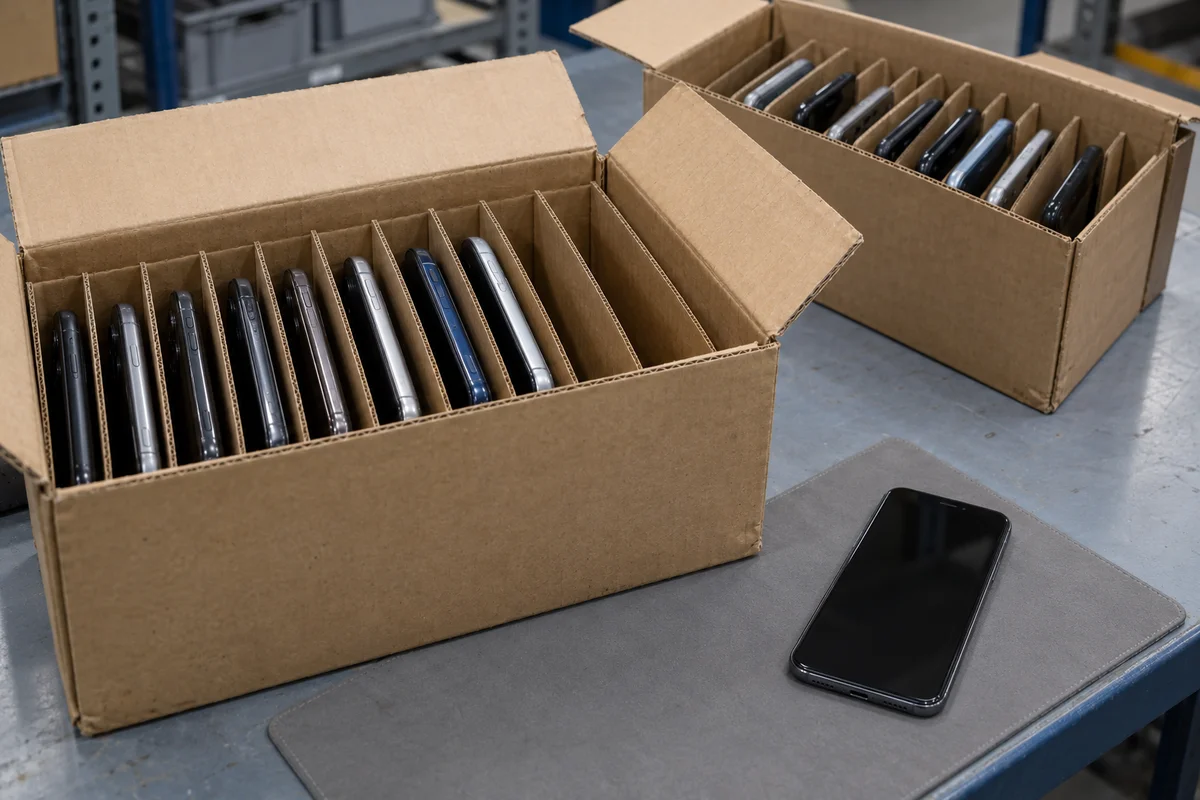
Keep the carton record concise: carton ID, actual phone count, model/source groups, selected handset IDs, completed matches, activation results, untested quantity and unresolved exceptions. Reconcile a physical count that differs from the packing list before calculating coverage.
If the purchase condition requires every handset to activate without prior-owner or organization restrictions, obtain an outcome for every handset through the agreed seller/buyer process. If only a sample is tested, agree the treatment of the remaining quantity explicitly. A passing sample cannot certify an individual untested phone.
When a mismatch, lock or adverse report appears, hold the affected units and expand inspection of the relevant group under the agreed procedure. Keep replacement units and their new results in the same lot record.
What should be settled before releasing the order?
Release the agreed quantity only after its evidence and inspection coverage satisfy the written acceptance conditions. Use this checklist to close the remaining decisions:
- Identity: the manifest, physical handset mapping and carton counts reconcile; substitutions are recorded.
- Status: the required service responses, coverage and query times are saved; flagged or unavailable results have an explicit disposition.
- Finance and access: carrier evidence, account setup and organizational release meet the conditions for the phones being accepted.
- Condition: inspection and repair records support the agreed grade and repair claims.
- Coverage and remedy: untested quantities, held units, recheck timing and remedies for later reports are agreed before release.
Use the first-order risk checklist to put the inspection scope, receiving evidence and exception procedure into the order. Keep the handset identifiers in the private order file so a later claim can be connected to the phone actually delivered.
Reference documents
- GSMA — Terms and Conditions for TAC Allocation, definitions and clauses 6.2–6.5; Device Check, service scope.
- Stolen Phone Checker — Terms of Use and Disclaimer, consumer access terms and clauses 1–4.
- AT&T — Unlock Your Phone or Device, general unlock requirements.
- Apple — If you want to buy a preowned iPhone; iPhone Parts and Service History (October 22, 2026); Release devices in Apple Business (UK guide).
- Google — Help prevent others from using your device without permission, device protection and reset requirements.
Related articles

What Unlocked Phones Work With Verizon?
Check an unlocked phone for Verizon using its exact model, private IMEI, carrier-lock status and SIM or eSIM requirements.
Read article
NDAA Compliant Security Cameras: What to Read on the Spec Sheet
Verify NDAA compliant security cameras before ordering: check FAR 52.204-25 covered entities, HiSilicon SoCs, 47 CFR 2.933 FCC ID grants, and ONVIF fields.
Read article
Authorized Distributors vs. Component Brokers: ECIA, CoC & IC Lab Tests
Compare franchised distributors (Mouser Electronics, DigiKey, Arrow) with open-market brokers to prevent counterfeit IC failures: verify SAE AS6496 CoC, MSL 3, and AS6171.
Read article